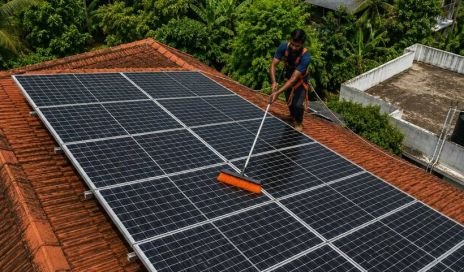
3 kW is the largest system that still collects the complete PM Surya Ghar subsidy and qualifies for collateral-free bank finance. It suits a Kerala home with a monthly KSEB bill of roughly ₹2,300 to ₹2,900.
Check your subsidy eligibility free, no obligation
Panel capacity is measured in kilowatts. Three kilowatts on a Kerala roof generates around eleven units on an average day: enough for a family home running fans, lights, a fridge, a washing machine and an air conditioner in moderate use.
It needs roughly the footprint of a single-car garage roof, facing anywhere from south-east to south-west, free of shade between about 9 am and 4 pm.
₹31,500
saved a year with 3 kW
Based on 1,400 units per kW per year at KSEB’s upper slab rates, giving about 4,200 units and ₹31,500 a year from 3 kW.
TYPICAL 3 KW CONFIGURATION: YOUR PROPOSAL CONFIRMS THE EXACT BILL OF MATERIALS
System size
3 kW grid-tied
Panels
6 × 550 W mono PERC
Shade-free roof area
210 – 270 sq ft
Inverter
3 kW string · hybrid optional
Generation, monthly average
about 350 units
Generation, yearly
about 4,200 units
Suits a monthly bill of
₹2,300 – ₹2,900
PM Surya Ghar subsidy
₹78,000: the full cap
Bank finance
Collateral-free up to ₹2,00,000
Panel warranty
30 years performance
Metering
KSEB bi-directional net meter
Is it right for you
3 kW fits most homes. Not every roof.
We would rather tell you now than after a deposit.
A GOOD FIT IF
3 kW is your size
✓ Your monthly KSEB bill runs between about ₹1,500 and ₹2,900
✓ You have 210 sq ft or more of roof clear of shade at midday
✓ The connection is domestic and in your name, or a family member’s
✓ You want the maximum subsidy without over-sizing the system
✓ You are an NRI owner and need the project run remotely
LOOK AT ANOTHER SIZE IF
3 kW is the wrong size
✓ Your bill regularly exceeds ₹3,500: look at 5 kW instead
✓ Coconut palms or a neighbouring building shade the roof at midday
✓ The roof structure needs strengthening first. We survey this too
✓ It is a commercial or LT-VII connection: subsidy rules differ
✓ You need backup through long outages. You want a hybrid with battery
Generation & savings
What 3 kW actually puts on your meter.
Kerala averages about 3.9 units per kilowatt per day across the year: about 1,400 units per kilowatt a year on a well-oriented roof. Net metering is what smooths the seasons together.
350
units a month, annual average
4,200
units a year from 3 kW
210–270
sq ft of shade-free roof
₹31,500
saved a year at KSEB rates
February, April
390 – 440
units a month. The best stretch of the Kerala year.
June, August
190 – 245
units a month. The south-west monsoon. Your banked credit covers the gap.
Rest of the year
325 – 380
units a month, steady, with the north-east monsoon dipping October and November.
Estimates for Ernakulam. Your own figures depend on roof angle, orientation and shading, which the free survey measures rather than assumes.
What is in the system
Every part named, before you pay anything.
Your proposal specifies the exact make and model of each item. No “or equivalent”, no substitutions on delivery day.
Solar panels
Six 550 W mono PERC modules. Tier-one cells, ALMM-listed, chosen to hold up in humid coastal air.
30-year performance warranty
Inverter
A 3 kW string inverter with MPPT tracking and Wi-Fi monitoring built in. Hybrid version if you want battery backup later.
Manufacturer warranty, typically 5–10 years
Mounting structure
Hot-dip galvanised or anodised aluminium rails, fabricated to your roof profile and rated for monsoon wind loads.
Fabricated in-house by our own team
Cabling & protection
UV-rated DC cable, AC cable, DCDB and ACDB, surge protection and a dedicated earthing pit. The parts nobody photographs and everybody depends on.
IS-compliant, inspected before commissioning
KSEB net meter
The bi-directional meter that records what you export as well as what you draw. We file the application and follow it through.
Applied for and tracked by us
Monitoring
Generation on your phone: daily yield, per-string performance and fault alerts. We watch the same dashboard.
For the life of the system
Survey to switch-on, step by step.
Six stages. Each finishes before the next begins, which is why they are numbered. This is a real sequence, not a list of services.
Stage 01
Free site survey
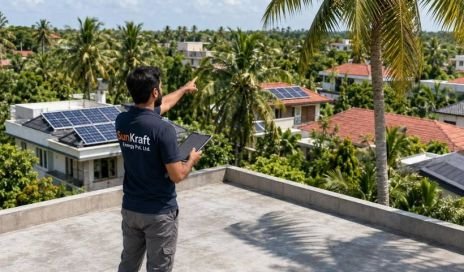
We measure your roof, check shading through the day, read your last twelve months of KSEB bills and inspect the structure. On-site, or by video call if you are abroad.
Stage 02
Custom design & written proposal
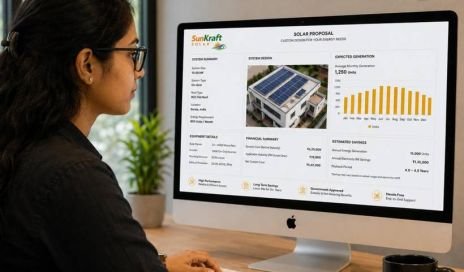
A panel layout drawn on your actual roof, the exact make and model of every component, expected generation month by month, your subsidy, your net cost and a specific commissioning date.
Stage 03
KSEB approvals and subsidy registration
We register you on the National Portal, file the KSEB feasibility application, chase the approval and handle the net-metering agreement. You stand in no queue.
Stage 04
Installation & commissioning
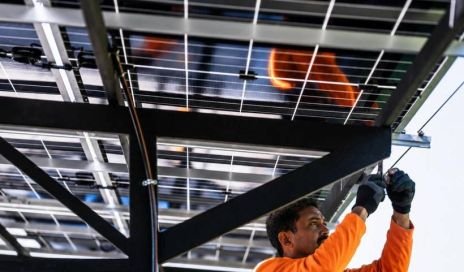
Mounting structure, panels, inverter, cabling, earthing and safety checks. One team, ours, for the roof work and the electrical work both. Typically two to three days on site.
Stage 05
Switch on, save and monitor
The net meter goes in, the system starts generating, and we submit the commissioning certificate that releases your ₹78,000. Monitoring goes live the same day.
Stage 06
Support for years to come
Panel cleaning, health checks, inverter service and warranty claims. We are on call for the life of the system.
WORK IT OUT
Is 3 kW your size?
Put in your monthly KSEB bill. One question, one answer. How many kilowatts your home actually needs.
✓ System size matched to your actual consumption
✓ Your exact PM Surya Ghar subsidy entitlement
✓ Expected monthly generation and roof area needed
₹10,500
saved per kW, every year
Based on 1,400 units per kW per year at KSEB’s upper slab rates. A 3 kW system generates about 4,200 units and saves roughly ₹31,500 a year.
This bill is for
₹
*Generally an amount you receive for your residential or commercial bill.
₹
Printed on your bill. It differs between slabs.
We need a name and a number to send your result and to call you back about a free survey.
The eight things people in Ernakulam ask before they book a survey.
How much roof do I need for 3 kW?
Between 210 and 270 sq ft that stays clear of shade from about 9 am to 4 pm: roughly a single-car garage roof. Sloped, flat and tiled roofs all work; the mounting structure changes, not the panel count.
How many units will it generate?
About 350 units a month as an annual average, roughly 4,200 units a year. February to April typically exceeds 390; June to August can drop to 190. Net metering carries the surplus across.
Do I definitely get the ₹78,000 subsidy?
For a residential connection at 3 kW, ₹78,000 is the full PM Surya Ghar assistance. 60% of benchmark cost to 2 kW plus 40% of the third kilowatt, capped there. It is credited to your bank account after commissioning, not deducted upfront.
Can I take a loan for it?
Yes. Home systems up to 3 kW qualify for collateral-free bank finance up to ₹2 lakh at concessional rates. We prepare the file and hand it to a nationalised bank. In most cases the EMI is close to the bill you stop paying.
What happens during the monsoon?
Generation drops to roughly 190–245 units in June, July and August. The units you exported in the dry months sit as credit on your KSEB account and offset the shortfall. That is exactly what net metering is for.
Will it work during a power cut?
A standard grid-tied 3 kW system shuts down during an outage: a mandatory safety feature protecting line workers. If you need power through cuts, ask about the hybrid inverter and battery option at survey stage.
How long does the whole thing take?
Installation is two to three days. The overall timeline is governed by KSEB feasibility approval and net-meter installation. Your proposal carries a specific expected commissioning date.
I live abroad. Can you handle it without me there?
Yes, regularly. Video survey, digital approvals, dated photo updates at every stage and monitoring you can watch from any timezone. A family member in Kerala only needs to be present for the KSEB meter installation.
Next step
Free site survey. No obligation.
One visit, one honest number. We will tell you the system size your roof and your bills actually justify, and if 3 kW is not it, we will say so.