
Micro-inverters
Micro-inverter solar systems for shaded and complex Kerala roofs
One inverter per panel instead of one for the whole array. It matters most on roofs that are partly shaded or face more than one direction.
A micro-inverter system puts a small inverter behind each panel instead of wiring all the panels into one central string inverter. Each panel then produces independently, so a panel in shade no longer drags down the panels it is wired…
Per-panel independence
Shade on one panel affects only that panel, not the whole string.
Suits split and awkward roofs
A roof facing several directions, or broken into small usable patches, can be used properly.
Per-panel monitoring
A single underperforming panel is visible instead of hidden inside a string average.
Costs more per kW
Micro-inverters are dearer than one string inverter, and the electronics sit on the roof. On a clean, unshaded, single-orientation roof a string inverter is usually the better value.
Where it helps
Shade behaves differently on each design
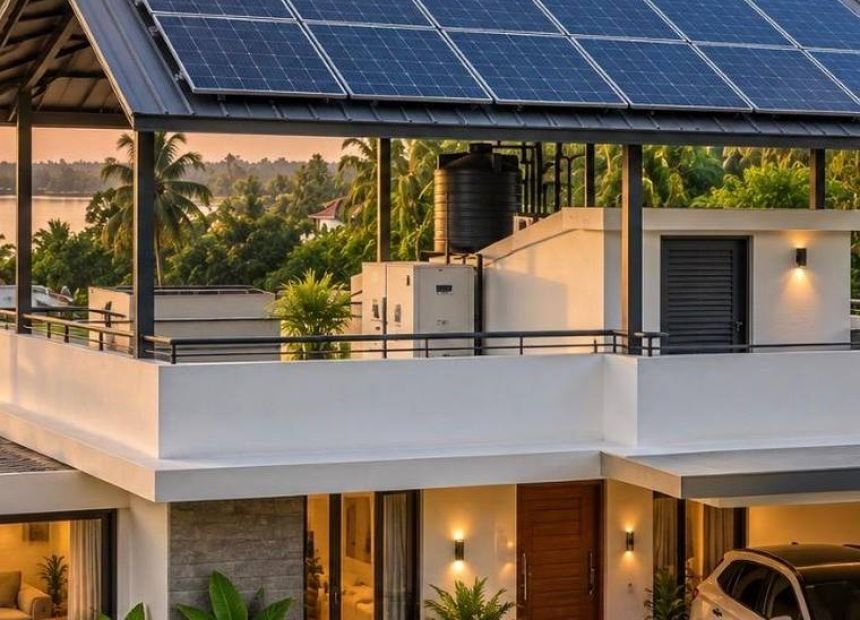
Panels are wired in series. A shaded panel drags down the string it sits in, so one obstruction can cost more than the panel it covers.
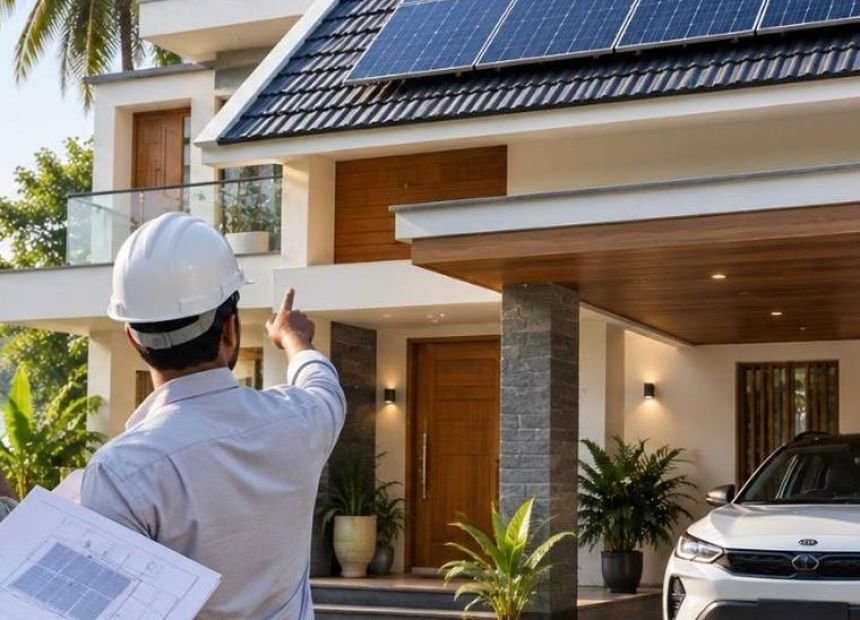
Each panel converts independently. A shaded panel loses its own output and nothing else, and every panel reports separately.
Compare
Micro-inverters against the alternatives
Micro-inverter
String inverter
Questions
Micro-inverters, answered
Is it worth the extra cost?
On an unshaded roof facing one direction, usually not. On a roof with a water tank, a parapet, a neighbouring building or two different orientations, often yes.
What about monitoring?
Per-panel reporting is the practical benefit people notice most: a failing panel is identifiable rather than inferred.
Does it change the subsidy?
No. PM Surya Ghar eligibility follows the system capacity and the connection type, not the inverter topology.
How many inverters am I maintaining?
One per panel, mounted under the array. They are designed for roof conditions, but there are more units in the system.
Trusted brands. Krafted for you.











Questions
Micro-inverters, answered
On a roof with partial shading through the day - palms, tanks, parapets, a neighbouring building - they recover output a string system loses. On a clear, single-orientation roof the extra cost usually is not justified. It is a decision the site survey should make, not a default.
No. A shaded panel still produces less. What changes is that it no longer pulls down the other panels in its string.
Yes. PM Surya Ghar eligibility and KSEB net metering follow the system being a residential grid-connected rooftop installation, not the inverter topology.
Next step
Have the shade surveyed.
A shade study establishes whether per-panel conversion earns its cost on your roof.
Explore
Related pages
Other configurations
Explore