
Hybrid · Battery backup
Hybrid solar systems with battery backup in Kochi & Ernakulam
Grid-connected, with a battery holding up the circuits you choose when KSEB supply drops.
Free site survey · written proposal in 24 hours
- Backup on chosen circuits
- Net metered
- Higher cost than on-grid
The short answer
What is a hybrid solar system?
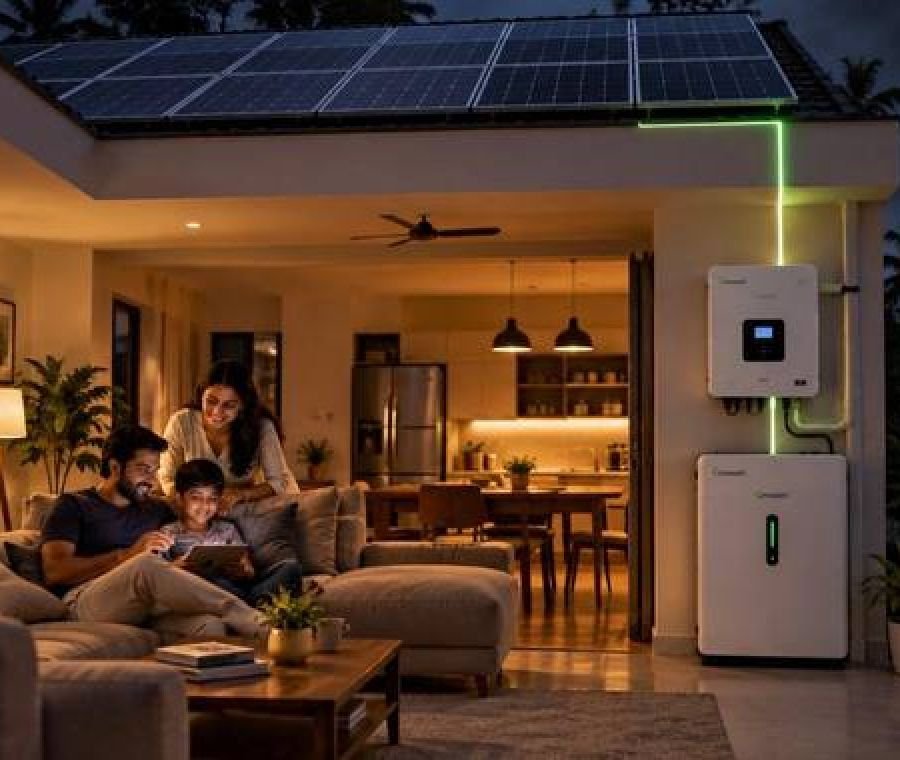
A hybrid solar system is grid-connected like an on-grid system, but it also has a battery and a hybrid inverter. It exports surplus to KSEB and earns net-metering credit in the normal way, and when the grid fails it keeps a chosen set of circuits running from the battery.
Hybrid is the right answer when an outage is genuinely disruptive. A home with someone working from it, medical equipment, a shop that cannot stop trading, or an area with frequent interruptions.
During an outage
What a battery actually changes
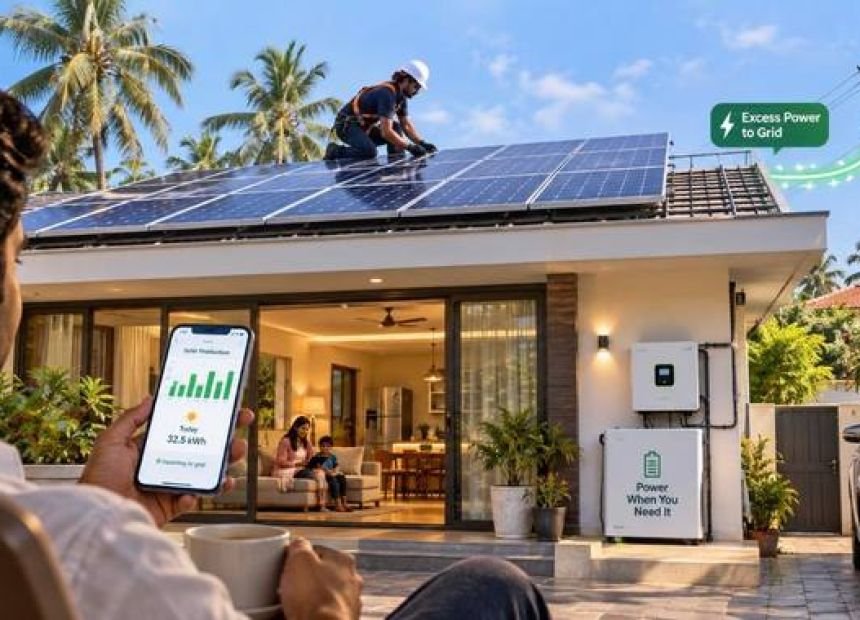
An on-grid system shuts down the moment KSEB supply fails. By design, so it cannot energise a dead line. The roof is generating; the house has nothing.
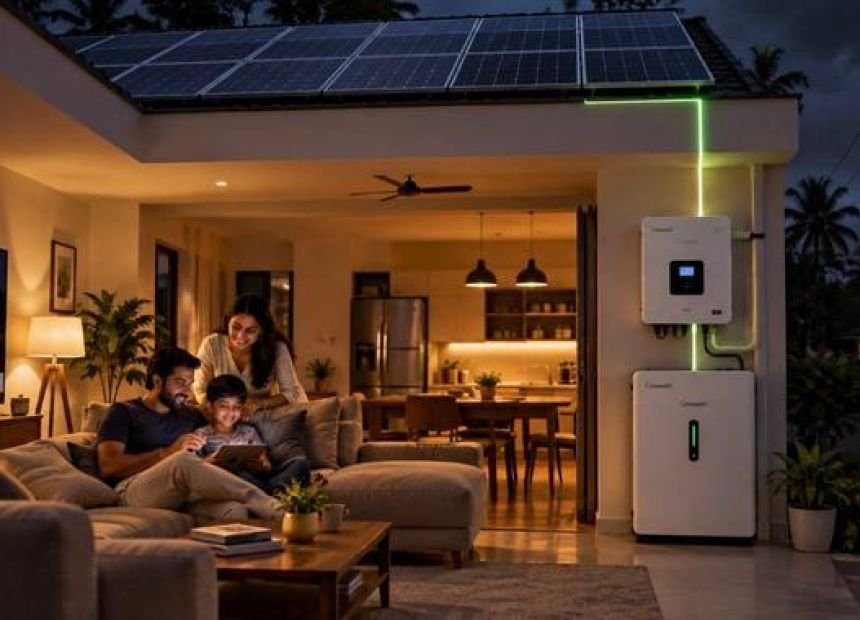
A hybrid inverter isolates the house and keeps chosen circuits live: lights, fans, router, fridge. Not the whole house, and not the air-conditioning.
Compare
Hybrid against the alternatives
Hybrid
On-grid
Off-grid
What to decide first
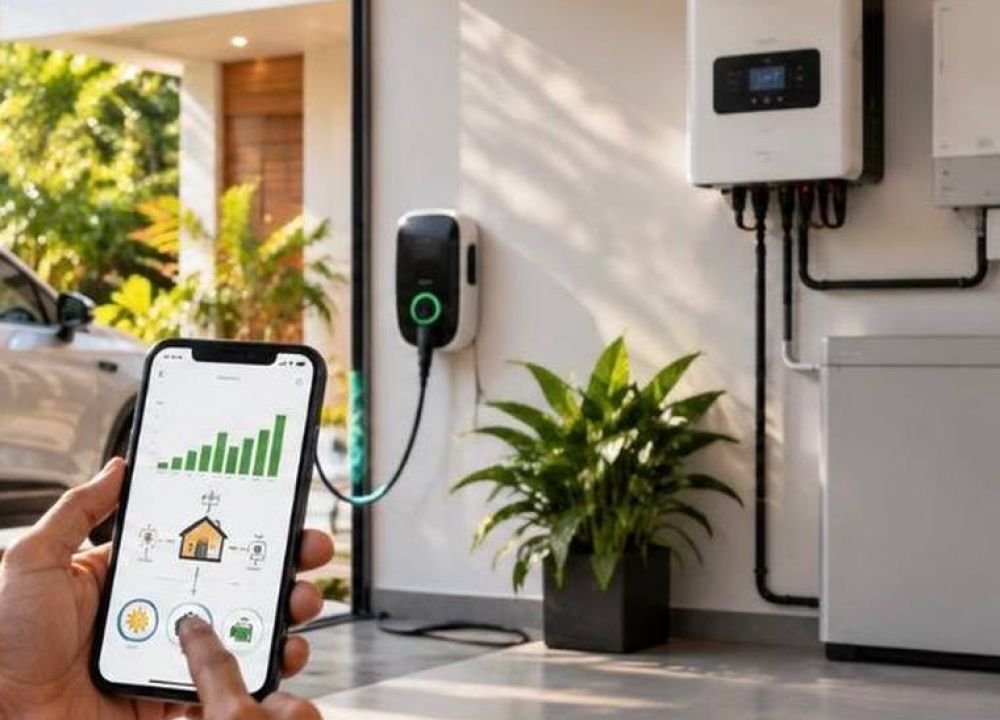
Which circuits actually need to stay live
Battery sizing follows the answer to that question, not the size of the array. A backup that carries lights, fans and a fridge is a very different specification from one asked to carry an air-conditioner.
Backup on selected circuits
You decide what stays live: lights, fans, router, fridge, a few sockets. Sizing everything for backup is expensive and usually unnecessary.
Still earns net-metering credit
A hybrid system exports surplus and is metered the same way an on-grid system is.
Battery is the cost driver
The battery and hybrid inverter are what make hybrid dearer than on-grid, and the battery is the part with a finite life.
Hybrid-ready is an option
Some households install an on-grid system with a hybrid-capable inverter and add the battery later.
Trusted brands. Krafted for you.












Questions
Hybrid, answered
It depends entirely on the battery capacity and what you have chosen to keep running. A battery sized for lights, fans, a router and a fridge behaves very differently from one asked to run air conditioning. This is decided at design stage from your actual backup priorities.
The subsidy is calculated on the solar capacity of a residential rooftop system, not on the battery. The scheme structure - ₹30,000 per kW for the first 2 kW, ₹18,000 for the third, capped at ₹78,000 - applies to the panel capacity.
It depends on the inverter. A hybrid-capable inverter can usually take a battery later; a plain grid-tied inverter generally cannot without being replaced. It is worth deciding before the inverter is chosen.
Not necessarily. It is worth the extra cost when outages genuinely disrupt you. If your supply is reliable and you mainly want to cut the bill, on-grid does that more cheaply.
Next step
Work out what backup you need.
We size the battery from the circuits you want held up, then price it.
Explore
Related pages
Other configurations
System sizes
Explore