
Maintenance
Solar panel maintenance and service in Kochi & Ernakulam
What a Kerala roof actually needs after the monsoon, and what it does not.
Free site survey · written proposal in 24 hours

What a visit covers
The maintenance checklist
A rooftop solar system has no moving parts, so maintenance is mostly inspection and cleaning: keeping the glass clear, checking that connections, mounting and earthing are sound, confirming the inverter is reporting correctly, and investigating any drop in generation. In coastal and backwater Kerala, cleaning matters more than it does inland.
Array
✓ Panel surface condition and soiling
✓ Mounting structure and fastener check
✓ Shade changes since installation
✓ Micro-cracks and hot-spot inspection
Electrical
✓ Inverter fault log and firmware
✓ DC and AC connection integrity
✓ Earthing and surge protection
✓ Isolator and protection devices
Output
✓ Generation against expected yield
✓ String-level comparison
✓ Net-meter reading reconciliation
✓ Report with anything found
Soiling
What monsoon dust and salt actually do
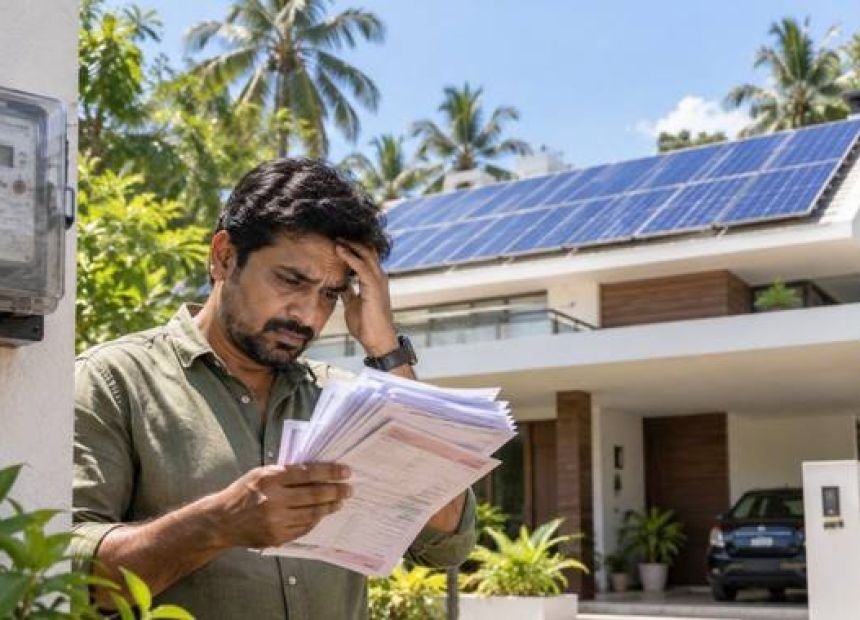
Soiling builds unevenly. The loss is rarely visible from the ground, which is why it shows up in the generation figures first.
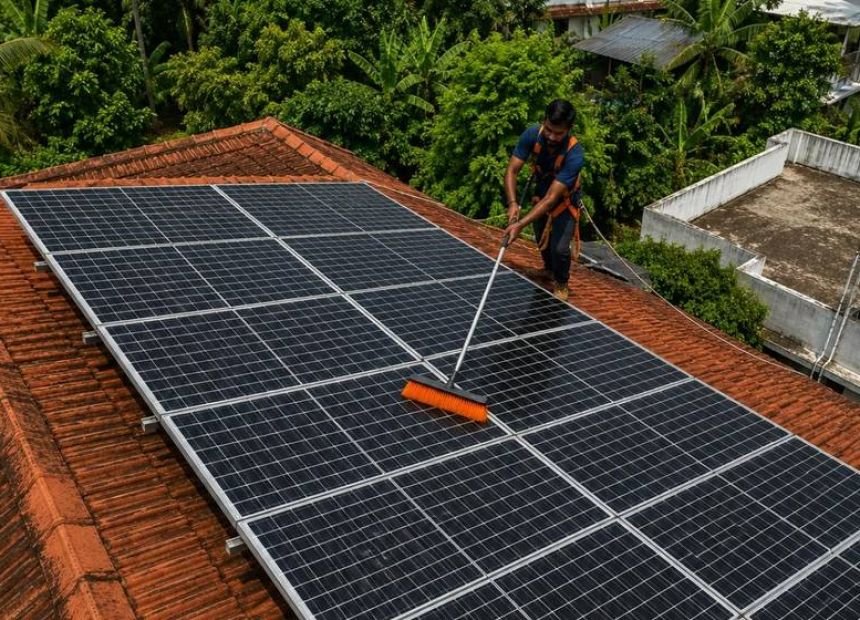
A clean array returns to its expected yield. We measure before and after so the difference is a number, not a claim.
What matters
Four things worth knowing
Generation monitoring
A steady drop against the same month last year is the earliest useful warning sign.
Electrical and structural checks
Connections, DCDB and ACDB, surge protection, earthing, and the condition of mounting hardware: particularly important near the backwaters.
Cleaning
Dust, salt film and bird droppings all cut output, and all of it is recoverable.
Warranty claims
If a panel or inverter fails inside its warranty, the claim has to be raised and pursued. We handle that for systems we install.
Trusted brands. Krafted for you.












Questions
Maintenance, answered
Cleaning frequency depends on location: a roof at Kumbalam or Aroor with salt in the air needs it more often than one at Tripunithura. Electrical and structural inspection on a periodic schedule, plus monitoring in between, is the sensible pattern.
Partly. Heavy rain removes loose dust, but it does not remove salt film, bird droppings or the residue left as water dries. It also tends to leave streaking on low-tilt arrays.
In rough order: soiled glass, new shading that was not there before, a string or panel offline, an inverter fault, or a connection problem. Monitoring data usually narrows it down before anyone goes on the roof.
Tell us what is installed and where, and we will say honestly whether we can take it on.
Next step
Book a maintenance visit.
A survey first if you are not already a customer, so we know what is on the roof.
Explore
Related pages
Explore